AC Milan, the legendary Rossoneri, a name synonymous with footballing royalty. A club etched in history with unforgettable triumphs in Serie A and across Europe. But the roar of the crowd faded, and the trophy cabinet gathered dust. A period of financial turmoil and instability threatened to extinguish the flame of this giant. Dark days led to uncertainty and a sense of despair amongst the passionate faithful. AC Milan was on the brink. Yet, from the ashes of despair, a flicker of hope ignited. A promise of revival, a resurgence fueled by strategic investment, smart leadership, and a renewed sense of purpose, offering a high-level overview. This isn’t just a story of football; it’s a testament to resilience, a dramatic narrative of a sleeping giant awakening. It is the story of a team clawing its way back to the summit. The Rossoneri are not just back; they’re hungry for more. The red and black colors, once dulled by disappointment, now shimmer with the potential of a new golden era. Prepare to witness the rebirth of AC Milan.
The Dark Days: Financial Crisis and Ownership Instability
AC Milan, a giant of Italian football, stumbled through a period marked by deep financial woes and a revolving door of owners. This era saw the club’s performance on the pitch plummet, its reputation tarnished, and its future hanging precariously in the balance. The once-proud Serie A team became a shadow of its former self, weighed down by unsustainable spending and questionable management decisions.
Following the departure of Silvio Berlusconi, long-time owner and influential figure, AC Milan entered a period of instability. Li Yonghong’s acquisition was initially met with hope, but quickly devolved into a financial quagmire. His tenure was characterized by reckless spending on players without a clear strategy for long-term sustainability.
This financial crisis led to sanctions from UEFA for violating Financial Fair Play regulations. The constant changing of ownership created an environment of uncertainty. New owners brought different visions, often clashing with existing structures and hindering any sense of continuity. The result was a team lacking direction, both on and off the field. Poor player acquisitions, driven by short-term thinking rather than strategic planning, further exacerbated the problems, leaving AC Milan struggling to compete at the highest level.
Elliott Management: A Necessary Evil or Savior?
Elliott Management’s arrival at AC Milan was a turning point, arriving when the club was mired in financial chaos following previous ownership regimes. The question remains: were they a necessary intervention or an unwanted takeover? The answer, like most things in football, is complex.
On the one hand, Elliott injected crucial capital and implemented a rigorous financial restructuring plan. AC Milan was burdened by significant debt, and Elliott’s primary focus was to stabilize the club’s finances and set it on a path of long-term sustainability. This involved careful management of resources, reducing debt, and implementing sustainable financial planning, a stark contrast to the freewheeling spending of previous owners.
However, this focus on fiscal responsibility wasn’t without its drawbacks. Critics argued that the emphasis on balancing the books sometimes came at the expense of investment in the team itself. Key players were sold, arguably against the wishes of the fans and coaching staff, with the departure of Gianluigi Donnarumma being a prime example. While these sales undoubtedly helped to improve the club’s financial position, they also raised concerns about AC Milan’s ability to compete at the highest level.
Despite these concerns, Elliott’s tenure undeniably brought stability to a club that desperately needed it. They steered AC Milan away from the brink of financial collapse and laid the groundwork for its resurgence. Whether they were a necessary evil or a savior depends on one’s perspective, but their impact on the club is undeniable. Their pragmatic approach, while sometimes unpopular, ultimately proved effective in restoring AC Milan’s financial health and competitiveness.
RedBird Capital: A New Era
The acquisition of AC Milan by RedBird Capital marked the beginning of a fresh chapter for the legendary Serie A club. RedBird’s arrival signaled a shift in strategy, building upon the groundwork established by Elliott Management while charting a course for sustained success both on and off the pitch. Their vision encompasses a holistic approach, focusing on modernizing infrastructure, enhancing the fan experience, and fostering a culture of winning.
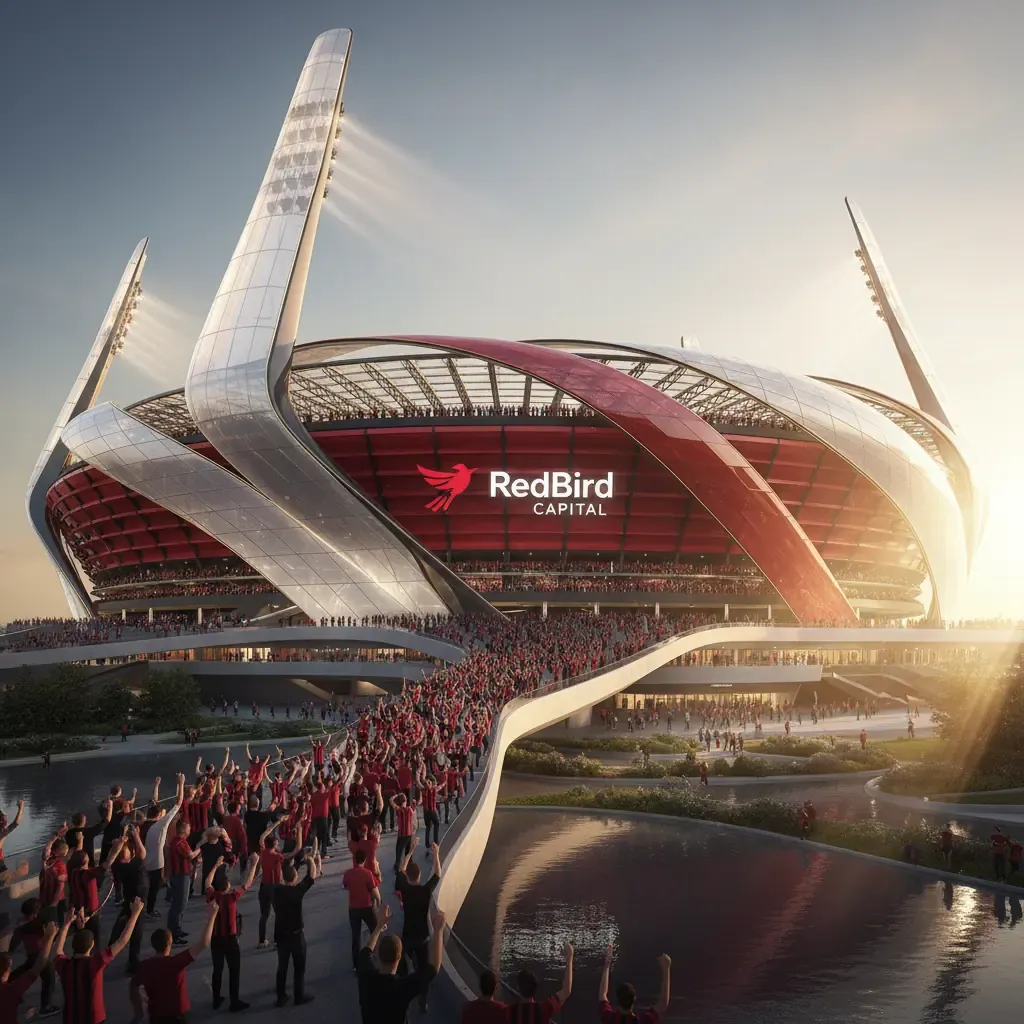
A key component of RedBird’s plan is the development of a new, state-of-the-art stadium. This investment is seen as crucial for increasing revenue streams and providing a world-class venue for players and supporters alike. Beyond the stadium, RedBird is committed to investing in the team’s training facilities and scouting network, ensuring a pipeline of talent for years to come. This dedication aligns with the club’s financial growth, with the organization reporting a historic third consecutive year of profit and new record revenue as of November 2025, according RedBird statements.
Sustainability is a core principle of RedBird’s management philosophy. This includes not only financial stability but also a commitment to responsible governance and community engagement. While Elliott Management focused on restructuring and financial recovery, RedBird aims to build on this foundation by implementing a long-term strategy focused on growth and global competitiveness. The ultimate goal is to consistently compete at the highest levels of Serie A and the Champions League, solidifying AC Milan’s position among the elite clubs in European football, creating a lasting legacy for the Rossoneri.
Key Players and Management
AC Milan’s recent resurgence is a testament to the collective effort of shrewd management and exceptional players. The architects of this revitalized Milan are a blend of tactical brilliance on the sidelines and breathtaking talent on the pitch.
Stefano Pioli: The Tactician
At the helm is Stefano Pioli, the manager who has masterfully orchestrated AC Milan’s transformation. He instilled a dynamic attacking philosophy while maintaining defensive solidity. Pioli’s tactical flexibility and ability to motivate players have been pivotal in unlocking the team’s potential. However, his future is always a talking point.
Paolo Maldini: The Club Legend
Off the field, the presence of club legend Paolo Maldini in a management role cannot be overstated. Maldini’s deep understanding of the club’s history and values, coupled with his astute judgment in player acquisitions, proved invaluable in shaping the squad’s identity and competitiveness before his departure.
The Stars on the Pitch
On the pitch, several players have emerged as key figures. Rafael Leão stands out with his electrifying pace and dribbling skills, consistently terrorizing opposition defenses. Mike Maignan, the goalkeeper, has provided a sense of security with his outstanding shot-stopping abilities and commanding presence. Theo Hernández, the dynamic left-back, contributes both defensively and offensively with his relentless energy and powerful runs.
Zlatan Ibrahimovic: The Lion
The return of Zlatan Ibrahimovic was more than just a signing; it was a statement. His experience, leadership, and unwavering self-belief injected a winning mentality into the squad. Even in his later years, Ibrahimovic’s impact on and off the field was undeniable, mentoring young players and demanding excellence.
New inclusions
The arrival of players like Christian Pulisic also signalled a new era for the club, bringing new energy in to the team.
Player Sales
The controversial sale of Tonali also defined AC Milan’s transfer strategy of buying young prospects and selling them for profit when the value is high
Tactical Evolution
AC Milan’s journey back to the top wasn’t just about signing star players; it was a tactical masterclass. Looking back, the team’s approach has been a chameleon, constantly adapting and evolving under different managers.
Under Massimiliano Allegri in the early 2010s, Milan often employed a 4-3-1-2 or a 4-3-3 formation, relying on individual brilliance and a solid defensive structure. This era showcased a pragmatic approach, prioritizing stability and exploiting moments of individual flair in attack. While successful, this system sometimes lacked the dynamism needed to consistently break down well-organized opponents.
The arrival of Stefano Pioli marked a turning point. He initially favored a 4-3-3, but the pivotal shift to the 4-2-3-1 unlocked the team’s attacking potential. This formation provided a solid base in midfield, allowing the attacking players to flourish. The two holding midfielders offered defensive cover, while the attacking trio behind the striker provided creativity and goals. This system created a balance between attacking and defensive duties, allowing Milan to control games and dictate the tempo.
Pioli’s Milan wasn’t afraid to adjust tactics based on the opposition. There were instances where a 3-5-2 was implemented, providing extra defensive solidity against strong attacking teams. This flexibility demonstrates the tactical intelligence of the coaching staff and the players’ ability to adapt to different roles and responsibilities.
The key to Milan’s tactical evolution lies in the constant search for balance and adaptability. The team’s current attacking style relies on quick transitions and fluid movement, while the defensive structure remains compact and organized. This tactical flexibility has been crucial in navigating the challenges of modern football and solidifying AC Milan’s position as a top team.
Financial Fair Play and Sustainable Growth
AC Milan, like many major European football clubs, operates under the watchful eye of UEFA’s Financial Fair Play (FFP) regulations. These rules are designed to ensure clubs spend responsibly and prevent them from accumulating unsustainable levels of debt. Navigating FFP is a constant balancing act, requiring shrewd financial management, strategic investment, and a clear long-term vision.
For AC Milan, achieving sustainability involves a multi-pronged approach. A key component is revenue generation, which encompasses various streams, including matchday income, broadcasting rights, sponsorships, and merchandising. Expanding the club’s global brand and attracting new commercial partnerships are crucial for boosting revenue.
Player sales also play a significant role in balancing the books. While AC Milan aims to retain its key players and build a competitive squad, strategically selling players at the right time can generate substantial income. This income can then be reinvested in acquiring new talent or improving existing infrastructure.
Ultimately, AC Milan’s goal is to create a self-sufficient financial model that allows the club to compete at the highest level without jeopardizing its long-term stability. This requires careful planning, disciplined spending, and a commitment to both sporting success and financial responsibility. Profitability in the transfer market, coupled with growing commercial revenue, are cornerstones of AC Milan’s strategy for sustained growth under the constraints of FFP.
Looking Ahead: International Ambitions and Future Challenges
AC Milan, a club steeped in history and prestige, harbors significant international ambitions, primarily focused on consistently competing at the highest echelons of European football, specifically the Champions League, while maintaining dominance in Serie A. The journey toward these goals, however, is fraught with considerable challenges.
One of the primary hurdles is the intense competition from other European powerhouses. Clubs with vast financial resources and established squads consistently challenge for Champions League glory. AC Milan needs to strategically navigate the transfer market to acquire top-tier talent while fostering a cohesive and competitive team spirit.
Squad depth is another crucial aspect. A long season, filled with both domestic and European commitments, demands a robust and versatile squad capable of withstanding injuries and maintaining peak performance levels. Investing in quality players across all positions is essential for sustained success. The recent additions to the squad are expected to elevate the team’s overall quality and provide the manager with more tactical flexibility. The degree to which they fulfill these expectations will be critical.
Beyond player acquisitions, improving infrastructure is paramount. While the possibility of a new stadium could provide a significant boost to the club’s revenue streams and enhance the overall matchday experience, it will require careful planning and execution. These infrastructural improvements are viewed as essential for AC Milan to firmly re-establish itself among Europe’s elite, attracting further investment and talent.
Ultimately, AC Milan’s ability to realize its international ambitions hinges on successfully overcoming these challenges, combining shrewd management, strategic investment, and a relentless pursuit of excellence on and off the pitch.
Conclusion
AC Milan’s revival marks a compelling journey from Serie A’s shadows to its forefront. Through strategic leadership, shrewd investments, and a commitment to nurturing talent, the Rossoneri have rediscovered their winning formula. As they continue on this path, their focus on sustainability both on and off the pitch promises a bright future, solidifying their legacy as a force in Italian and European football for years to come. The club’s resurgence is not just a moment but a solid step towards continued success.