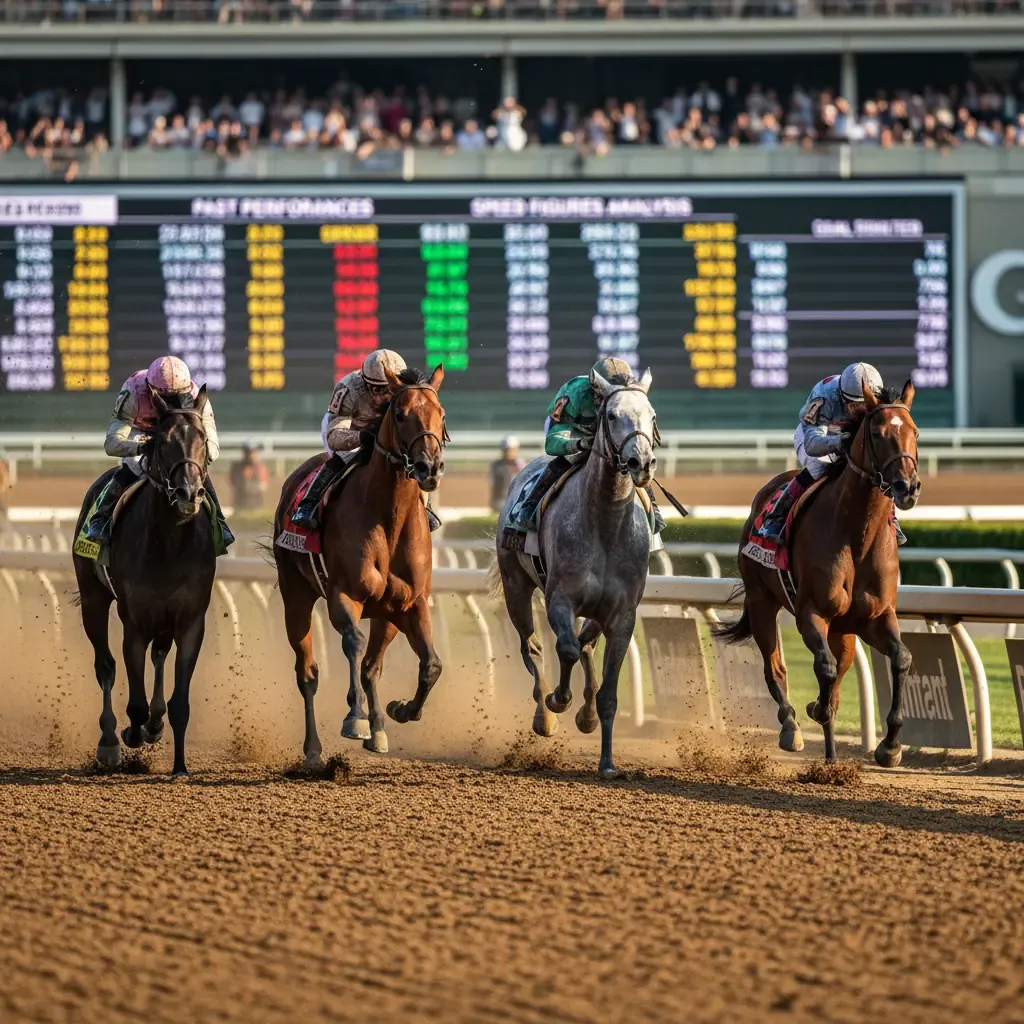
The Haskell Stakes. The name itself conjures images of thundering hooves, fierce competition, and the electric atmosphere of Monmouth Park. It’s more than just a horse race; it’s a proving ground for champions, a battle of wills, and a spectacle that captivates the nation. The Haskell isn’t just tradition; it’s a pivotal event in the three-year-old campaign, a race where legends are made and futures are shaped.
For those who dare to test their handicapping skills, the Haskell Stakes offers a unique opportunity. But the path to betting success is paved with knowledge, strategy, and a keen understanding of the contenders. You need more than just luck; you need an expert’s edge.
Consider this your official Haskell Stakes guide to navigating the complexities of this prestigious race. Prepare to explore proven strategies, dissect the contenders, and equip yourself with the tools needed to approach the Haskell Stakes with confidence. By the end, you’ll be ready to place informed bets and experience the thrill of victory.
Understanding the Haskell Stakes
The Haskell Stakes, a premier Grade 1 thoroughbred horse race, unfolds annually at Monmouth Park. This prestigious event boasts a rich history, a substantial purse, and significant implications for contenders eyeing the Breeders’ Cup Classic. Run over a distance of 1 1/8 miles, the Haskell Stakes attracts top three-year-old horses, making it a pivotal race in the American racing calendar. Its Grade 1 status signifies the highest level of competition, drawing considerable attention from owners, trainers, and racing enthusiasts alike. The race serves as a crucial stepping stone for horses aiming to compete in the Breeders’ Cup Classic, offering not only prize money but also a guaranteed spot in the starting gate.
Historical Significance
The Haskell Stakes is steeped in history, witnessing legendary horses and unforgettable moments. Over the years, several iconic horses have etched their names into the Haskell Stakes record book. Names like Bet Twice, Holy Bull, Serena’s Song, Skip Away, Point Given, Rachel Alexandra, American Pharoah, and Authentic are synonymous with the race. These champions, among others, have delivered performances that resonate through racing history. The Haskell has also been the stage for stunning upsets and record-breaking runs, further cementing its place as one of the most important races in North America.
Key Contenders to Watch in 2025
The Haskell Stakes 2025 is shaping up to be a thrilling contest, featuring a blend of established stars and promising newcomers. Identifying the top contenders early allows for a deeper understanding of the race dynamics and potential outcomes. Here’s an analysis of some horses to keep a close eye on:
Journalism: This colt has been turning heads with his impressive speed figures and tactical versatility. Journalism has shown the ability to win from both the front and off the pace, making him a dangerous threat in any scenario. While still relatively inexperienced, his recent performances suggest he is rapidly improving. It is very important to consider his adaptability to different track conditions. His last race showed he can manage great speed on different tracks.
Gosger: Known for his remarkable stamina, Gosger could be a formidable presence in the Haskell Stakes. This horse demonstrated staying power in longer races, suggesting that the Haskell’s distance will suit him well. However, he needs to show that he can speed up, when challenged by faster horses. His previous races signal his power and endurance.
Burnham Square: Burnham Square is a horse with a late-closing style, frequently gaining momentum in the final stretch. This tactic can be effective at Monmouth Park, but he’ll need a fast pace upfront to set up his run. His success will heavily rely on how the race unfolds. Burnham Square is a horse that could surprise many. He is known to be a bit quirky, but he usually delivers.
Goal Oriented: Goal Oriented is another horse with a string of consistent performances. It’s important to highlight his reliability and adaptability. His ability to perform well under different conditions makes him a horse to watch. His middle-of-the-pack style might not make him a favorite, but his consistency cannot be overlooked.
Trainer Spotlight
The influence of a trainer can significantly impact a horse’s performance in the Haskell Stakes. Trainers are strategists, dieticians, and psychologists to their horses.
Bob Baffert, a name synonymous with Triple Crown success, has a remarkable record in the Haskell Stakes. His meticulous training regimen and ability to bring out the best in his horses make him a constant threat. Baffert’s Haskell Stakes statistics speak for themselves, with multiple victories and a knack for preparing horses to peak on race day. Even if he doesn’t have an obvious top contender, his presence alone adds a layer of intrigue to the race.
Evaluating Past Performances: A Key Skill
Decoding past performances is crucial for smart handicapping. It transforms a chaotic sea of numbers into a navigable map, guiding you toward potentially profitable choices. It is more than just looking at who won; it is understanding how they won and whether they can repeat their performance. The past performance chart is the handicapper’s Rosetta Stone, unlocking a wealth of information about a horse’s capabilities, preferences, and consistency.
At its core, the past performance reveals a horse’s racing history, detailing each race they’ve run. This includes the date, track, distance, surface, and the horse’s finishing position. It also shows the odds, the jockey, and the trainer – all pieces of the puzzle. Comparing a horse’s performance across various distances offers insights into stamina. Did they fade in longer races, suggesting a preference for shorter sprints? The type of track surface – dirt, turf, or synthetic – significantly impacts performance. Some horses thrive on dirt but struggle on turf, and vice versa. Class refers to the level of competition the horse has faced. A horse consistently winning against lower-class competition might falter when stepping up to a higher level. Identifying these preferences is key to predicting future success.
Consider a hypothetical scenario: say, a horse that consistently achieves high speed figures on fast dirt tracks but underperforms on sloppy surfaces. If the Haskell is run on a muddy track, this horse’s past performances would suggest caution, regardless of its recent wins. Conversely, a different horse with a history of strong finishes on similar sloppy tracks might present a compelling betting opportunity, even if its overall record is less flashy.
Understanding Speed Figures
Speed figures provide a standardized way to compare a horse’s performance across different tracks and distances. They compress a race’s many variables into a single, easy-to-understand number, reflecting the horse’s speed relative to the track and the conditions on that day. The Beyer Speed Figure is perhaps the most well-known, assigning a numerical value to each race based on the final time and track variant. Analyzing speed figures allows handicappers to quickly identify horses that have consistently run fast races, regardless of the specific track or distance. These figures also help to neutralize the impact of track conditions, making it easier to compare performances across races run on different days or at different locations.
Expert Strategies for Haskell Stakes Betting
The Haskell Stakes is more than just a race; it’s a prime opportunity to put your horse racing knowledge to the test. However, successful betting requires more than just picking a favorite. It demands a strategic approach, combining understanding wagering types, responsible bankroll management, and the ability to identify those lucrative value bets.
Understanding Wagering Types
Before diving into the Haskell Stakes betting pool, it’s crucial to understand the different types of wagers available. Each offers a unique risk-reward profile, so picking the right one for your strategy is key.
- Win: A straightforward bet – your horse must finish first to win.
- Place: Your horse needs to finish in the top two to win.
- Show: Your horse must finish in the top three to win. This is generally considered the safest bet of the three.
- Exacta: Predict the first two finishers in the correct order. This is a more challenging bet with potentially higher payouts.
- Trifecta: Predict the first three finishers in the correct order. The difficulty ramps up, as do the potential winnings.
- Superfecta: Predict the first four finishers in the correct order. This is the most difficult of the common wagers, offering the highest potential reward.
Bankroll Management: Betting Responsibly
Effective bankroll management is paramount for long-term success in horse racing betting. It’s the discipline that separates casual bettors from serious contenders. A good rule of thumb is to only wager what you can comfortably afford to lose. Never chase losses, and set a budget for each race meet, sticking to it regardless of wins or losses. Consider dividing your bankroll into units, wagering only a small percentage (1-5%) per race. This approach helps to weather any losing streak and prevents you from depleting your funds too quickly.
Identifying Value Bets
A value bet is where the odds offered by the bookmaker are higher than your assessment of the horse’s probability of winning. This requires careful analysis of past performances, speed figures, track conditions, and jockey/trainer combinations. For instance, if you believe a horse has a 30% chance of winning, but the odds imply a lower probability (e.g., 4-1 odds implying a 20% chance), it could be a value bet. Identifying these discrepancies is key to long-term profitability. Look for horses that may be overlooked by the public due to a recent poor performance or a perceived disadvantage in the race setup.
Learning from the Past: Haskell Stakes Betting Insights
Analyzing past Haskell Stakes results can provide valuable insights. Look for trends in winning post positions, running styles, and trainer success rates. Were there any longshot winners that defied expectations? Understanding these historical patterns can help refine your handicapping and identify potential value bets in the current race. However, remember that each race is unique, and past performance is not a guarantee of future success.
Conclusion
Navigating the Haskell Stakes betting landscape doesn’t have to feel like a gamble itself. By staying informed, weighing the contenders, and understanding the nuances of Monmouth Park, one can significantly improve their chances of picking a winner. From closely monitoring past performances to factoring in trainer and jockey expertise, every detail can contribute to a more informed decision.
Ultimately, the Haskell Stakes is more than just a race; it’s a challenge that blends skill, insight, and a touch of luck. Armed with expert tips and a strategic approach, one can confidently engage with this thrilling event.