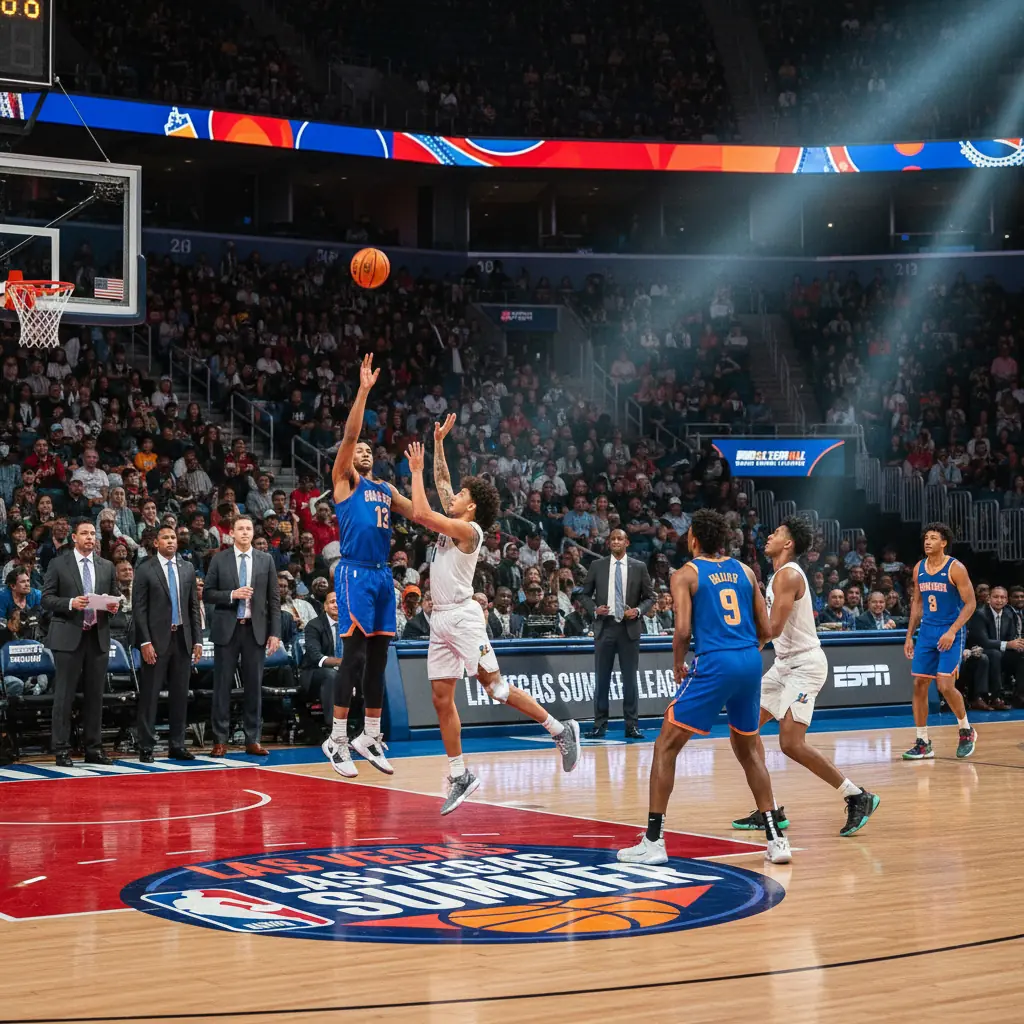
The electric atmosphere of the Las Vegas NBA Summer League crackles with anticipation. It’s a proving ground where fresh-faced rookies showcase their skills and seasoned veterans fight for another shot at the big time. The stands buzz with excitement as fans and scouts alike try to decipher who will be the next breakout star and who will fade into obscurity.
Summer League is more than just basketball; it’s a glimpse into the future of the NBA. It’s a place where dreams are realized and potential is put to the test. But beneath the hype, a crucial question remains: who are the players truly poised to make an impact? Forget the noise and get ready for an expert breakdown of the noteworthy players who are separating themselves from the pack and flashing real NBA potential.
Understanding Summer League Context
Summer League is a unique and often misleading environment. It’s a proving ground, a laboratory, and a hype machine all rolled into one sweaty, fast-paced package. While it offers basketball fans a first glimpse at rookies and a second look at developing players, it’s crucial to understand the context before drawing any definitive conclusions. Performance in Summer League exists in its own distinct ecosystem, far removed from the pressures and strategic complexities of the NBA regular season.
One of the biggest fallacies is equating Summer League stats with future NBA success. The level of competition is noticeably different. You’re seeing a mix of rookies adjusting to the professional game, G-League hopefuls fighting for a roster spot, and international players trying to showcase their skills. This creates an arena where certain players can appear dominant against lesser competition, leading to inflated stats that don’t necessarily translate to the NBA. For example, a player who excels at isolation plays and scoring in Summer League might find those opportunities far more limited against the defensive schemes and seasoned defenders of a regular-season team.
Team dynamics also play a significant role. Summer League teams are often hastily assembled, lacking the established chemistry and defined roles of their NBA counterparts. This can lead to unpredictable performances. A player who thrives as the primary ball-handler in Summer League might be relegated to a different role within a structured NBA offense. Conversely, a player who struggles to stand out in the chaotic environment of Summer League might flourish when placed in a more defined role within a cohesive NBA system. Therefore, when evaluating players, it’s really important to watch what the player is doing, is he playing the right way, is he taking good shoots. All these things can determine if he can play with an organization.
Ultimately, Summer League is about player development and experimentation. It’s a chance for players to work on their weaknesses, showcase their strengths, and get valuable reps against professional competition. Understanding these factors—competition level, team dynamics, and individual goals—is essential for accurately evaluating player potential and tempering expectations. Don’t be fooled by the flashy highlights; focus on the underlying skills and potential for growth.
Top Rookie Standouts
The NBA Summer League served as an exciting sneak peek into the future, with several highly-touted rookies offering glimpses of their potential and hinting at promising NBA careers. These young players, fresh off being drafted, showcased their skills and athleticism, leaving fans and analysts eager to see how they develop in the upcoming season. Among the standouts were Cooper Flagg, Dylan Harper, and VJ Edgecombe, each displaying unique talents that could translate into significant NBA contributions.
Cooper Flagg: Scoring Prowess on Display
Cooper Flagg, drafted by the Dallas Mavericks, immediately impressed with his scoring prowess. He demonstrated a variety of offensive moves, driving to the basket with determination and finishing with finesse. He has shown skills to score using either hand, and using different skillset, like floaters and layups. His offensive versatility, combined with his defensive capabilities and the versatility to guard multipole positions, makes him an intriguing prospect for the Mavericks. His matchup against Dylan Harper and the Spurs provided a glimpse of his potential, although areas for improvement, particularly in his consistency and decision-making speed, were also apparent.
Dylan Harper: Playmaking and Court Vision
Dylan Harper, joining the San Antonio Spurs, showcased his exceptional playmaking abilities and court vision. His passing accuracy and decision-making were particularly noteworthy, consistently finding open teammates and creating scoring opportunities. Harper’s ability to facilitate the offense and see the floor could be a major asset for the Spurs. While his offensive skills are refined, he showed good defensive capabilities and his ability to guard multiple positions. In limited time on the court, he showed high IQ plays. His performance against Flagg and the Mavericks highlighted his strengths, but also revealed areas needing refinement, such as his shooting range and defensive consistency.
Hidden Gems & Undrafted Success Stories
The NBA Summer League is more than just about lottery picks showcasing their talents; it’s a proving ground where hidden gems emerge and undrafted hopefuls defy expectations. While the spotlight shines brightest on the headliners, several overlooked players quietly displayed the potential to become valuable role players at the next level. These are the kinds of players whose grit and determination resonate far beyond the box score.
One name that consistently popped up throughout the Summer League circuit was Jahmir Young. Overlooked by every team in the NBA Draft, Young entered the Summer League with something to prove, and he did just that. A combination guard with a knack for scoring, he demonstrated his ability to create his own shot, penetrate the lane, and knock down jumpers with impressive consistency. His court awareness allowed him to be a playmaker, setting up teammates for easy baskets. His offensive versatility allows him to easily fit into almost every teams format, allowing him to be useful in a variety of team dynamics and playstyles.
Beyond his scoring prowess, Young showcased a willingness to compete on the defensive end, hounding opponents and disrupting passing lanes. While he may not possess elite athleticism, his high basketball IQ and understanding of angles allow him to be an effective defender. In an NBA rotation, Young could carve out a niche as a spark plug off the bench, providing instant offense and defensive tenacity when his number is called. His ability to handle the ball and create scoring opportunities would alleviate pressure on star players, while his defensive effort would endear him to coaches and teammates alike.
Ultimately, the success of these undrafted players will depend on their willingness to continue honing their skills and adapting to the rigors of the NBA. However, their Summer League performances offered a tantalizing glimpse of their potential, proving that sometimes, the most valuable players are the ones who were initially overlooked.

Veteran Re-Establishing Themselves
For veterans, the NBA Summer League isn’t just about showcasing raw talent; it’s a proving ground for re-emergence, a chance to demonstrate honed skills and a renewed commitment to the game. It’s about seizing a second chance and proving they still have what it takes to contribute at the highest level. Many veterans use this platform to turn their careers around.
Take, for instance, the journey of Kobe Bufkin. He represents a compelling case study in veteran re-establishment. Bufkin’s path hasn’t been linear, but he has the chance to show his value. Bufkin’s goal this summer is to demonstrate his enhanced playmaking abilities, his refined shooting stroke, and his improved defensive versatility. These are not merely incremental improvements; they are the result of focused effort, meticulous training, and a deep understanding of the modern NBA game.
Bufkin now seeks to translate those improvements into tangible contributions for his team. His enhanced court vision and passing accuracy could unlock new offensive opportunities for teammates, while his more consistent jump shot can provide a valuable scoring punch. Furthermore, his commitment to defense, particularly his ability to guard multiple positions, aligns perfectly with the demands of today’s NBA. The Summer League provides him with the perfect stage to showcase these evolved attributes, proving to both his current team and potential suitors that he is not just a player with past experience, but a valuable asset ready to make an immediate impact.
Key Takeaways & What to Watch For in the Regular Season
The NBA Summer League is a wrap, leaving behind a trail of exciting highlights and intriguing storylines. While it’s crucial to remember that Summer League performances don’t always translate directly to regular-season success, it offers valuable glimpses into rookie potential, player development, and evolving team dynamics. Before diving into the real games, here’s what stood out and what deserves close attention.
Rookie Readiness and Skill Translation
A key takeaway is identifying which rookies possess skills that are likely to translate well to the NBA level. For instance, a rookie demonstrating exceptional court vision and passing ability in Summer League is more likely to contribute meaningfully in the regular season than one whose success hinges solely on athleticism. Pay close attention to how rookies adapt to the faster pace and increased physicality of the NBA. Did they show skills using screens? Did they make good passes? That could be a good indicator.
Sleeper Candidates and Fantasy Basketball Gems
Summer League often unveils potential sleeper candidates for fantasy basketball enthusiasts. These are players who may be undervalued in drafts but possess the skill set and opportunity to exceed expectations. Focus on players who showcased improved shooting, rebounding, or defensive prowess during the summer. Also, monitor their roles within their respective teams during the preseason. A player who secures a consistent spot in the rotation is more likely to provide fantasy value.
Team Needs and Strategic Adjustments
Summer League provides insights into how teams are addressing their needs and experimenting with different strategies. Keep an eye on teams that showcased improved ball movement, defensive schemes, or offensive sets. These adjustments could signal a shift in their approach during the regular season. Also, observe which players are being given opportunities to fill specific roles. This can indicate where a team sees it’s biggest needs, and who they plan on using to fill them.
Metrics to Track
Beyond the box score, certain metrics can offer a deeper understanding of player performance. Track assist-to-turnover ratio for point guards, three-point shooting percentage for perimeter players, and rebounding rate for big men. These metrics provide a more comprehensive evaluation of a player’s impact on the game.
Players to Watch
While individual performances are important, it’s equally crucial to monitor how players fit within their team’s system. Watch how rookies interact with established veterans, how players adapt to different roles, and how teams utilize their rotations. Some of the players that showed improvement over last year, could translate to bigger roles this upcoming season.
Conclusion
The NBA Summer League serves as an exciting introduction to the league’s newest talent. The electrifying plays and flashes of brilliance understandably generate significant buzz. It’s easy to get caught up in the hype surrounding potential future stars. However, it’s crucial to remember to view these performances within the proper context.
Summer League is merely the first glimpse. The intensity, strategy, and seasoned competition of the regular NBA season present entirely different challenges. The players who dominate in July may face adjustments and growth throughout the year.
So, while enjoying the highlights and celebrating the potential, remember that Summer League is just the beginning of a long journey. Follow these players throughout the regular season to truly see their development and solidify your assessment of their future impact on the NBA.